
Building a more sustainable laboratory: a conversation with Dr Bibian Okokhere-Edeghoghon at CWBE
Sustainability is becoming an essential part of modern research, and the University of Bath’s Centre of Excellence in Water-Based Early-Warning Systems for Health Protection (CWBE) is leading by example. Following the achievement of Gold LEAF (Laboratory Efficiency Assessment Framework) accreditation across all laboratory spaces in Chemistry and Life Science, the Centre has continued to build on its sustainability ambitions through University’s Green Impact programme, as well as LabCycle’s laboratory plastic recycling scheme, helping reduce plastic waste and move towards a more circular approach to laboratory operations.
We spoke to Dr Bibian Okokhere-Edeghoghon about the team’s journey, the challenges of driving change, and what’s next for sustainability at CWBE.
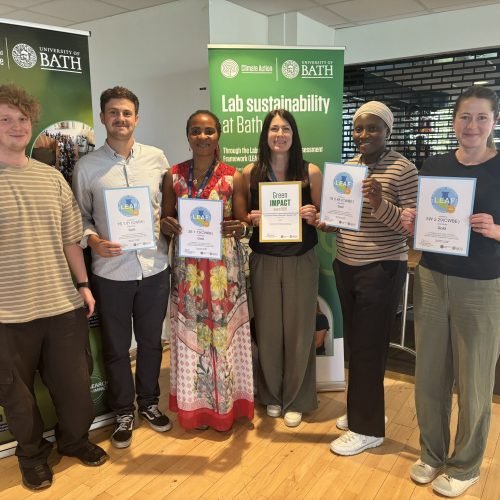
First things first – congratulations on achieving Gold LEAF accreditation! 🎉 What does that achievement mean to you and the team?
Bibian: “Thank you! Achieving Gold LEAF accreditation was a proud moment for the entire team. It is recognition of the hard work, commitment, and cultural shift that has taken place across the laboratory. For us, it is not just about receiving an award but about embedding sustainability into our everyday practices and decision-making. It demonstrates that high-quality scientific research and environmental responsibility can go hand in hand. Most importantly, it reflects a collective effort, with everyone playing a role in making our laboratory more sustainable.”
Turning waste into resources
Was there a moment when you realised how much laboratory plastic was being thrown away?
Bibian: “The real eye-opening moment came when we began paying closer attention to our waste streams. Like many laboratories, we generate a significant amount of plastic through routine activities, and much of it was being treated as general laboratory waste despite being suitable for recycling. Once we started quantifying what was being discarded, it became clear that there was a huge opportunity to reduce waste and improve our environmental impact.”
Why did you decide to introduce LabCycle at CWBE, and how did you get the team involved?
Bibian: “Introducing LabCycle felt like a logical next step in our sustainability journey. We were already looking at ways to reduce small laboratory waste through the LEAF programme, and LabCycle offered a practical solution to a challenge faced by many research labs.
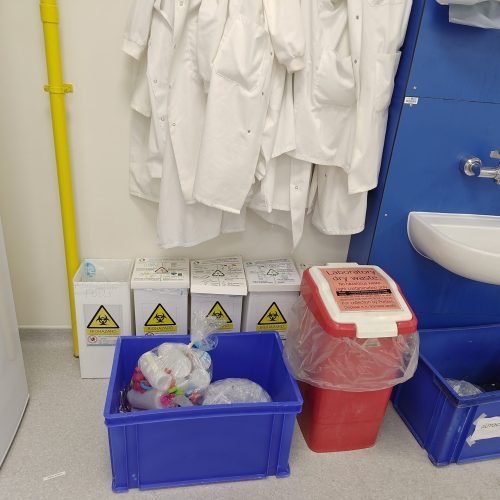
Getting people on board started with raising awareness in group meetings. We shared information about what could be recycled, the environmental benefits, and how simple the process would be. We also made participation as easy as possible by providing clear guidance on how to use the LabCycle bins, and accessible collection points. Once colleagues understood the positive impact and saw how straightforward it was, support grew naturally.”
What was the biggest challenge in introducing LabCycle?
Bibian: “One of the biggest challenges was changing long-established habits around waste disposal. In busy laboratory environments, people tend to follow processes they are familiar with, so introducing a new system required clear communication and ongoing engagement. We addressed this through training at group meetings, regular reminders, and creating simple visual guides to help people identify what could and could not be recycled. Over time, as the process became part of daily laboratory routines, participation increased and the change became much easier to sustain.”
Shifting the culture: small changes, big impact
Have you noticed any changes in the team’s attitude towards sustainability?
Bibian: “Absolutely. One of the most encouraging outcomes has been seeing sustainability become part of everyday conversations. Team members are now more likely to question whether items can be reused, recycled, or purchased more sustainably. We have also seen individuals proactively suggesting ideas to reduce waste and improve laboratory efficiency. I think LEAF and LabCycle have helped demonstrate that sustainability isn’t something separate from research activities; it’s something that can be integrated into the way we work every day.”
What is one sustainability habit every laboratory could adopt tomorrow?
Bibian: “A simple but effective change is to critically assess whether single-use items are always necessary. While some applications require them for safety or quality reasons, there are often opportunities to introduce reusable alternatives or reduce unnecessary consumption. Even small changes, when multiplied across an entire laboratory or institution, can result in significant reductions in waste, resource use, and costs.”
If you could bust one myth about laboratory sustainability, what would it be?
Bibian: “I would challenge the idea that laboratory sustainability requires major investments or drastic operational changes. While larger projects can certainly help, many impactful improvements come from small, practical actions such as reducing waste, switching equipment off when not in use, optimising procurement, and improving recycling practices. Sustainability is often about making smarter choices rather than making bigger changes.”
What’s next?
What role can recycled-content laboratory products play in creating greener laboratories?
Bibian: “We are increasingly interested in exploring products that incorporate recycled materials, provided they meet the performance and quality standards required for laboratory work. Recycled-content consumables have the potential to support a more circular economy by creating demand for recycled materials and reducing reliance on virgin plastics. While they are not a complete solution on their own, they form an important part of a broader sustainability strategy that includes reducing consumption, reusing materials where possible, and improving recycling practices.”
Are there any sustainability goals or projects you’re particularly excited about?
Bibian: “We are keen to build on the momentum we have gained through LEAF and LabCycle. Our focus is on continuing to embed sustainable thinking into all aspects of laboratory operations, identifying new opportunities to reduce waste, improve resource efficiency, and engage staff in sustainability initiatives. I am particularly excited about strengthening our circular economy approach, exploring more sustainable procurement options, and continuing to work with colleagues to develop innovative solutions that support both excellent research and environmental responsibility. Sustainability is an ongoing journey, and we are always looking for ways to take the next step forward.”