
LabCycle secures £1M+ seed funding to scale circular solution for laboratory plastic waste
Each year, more than 5.5 million tonnes of plastic waste are generated by research and healthcare laboratories globally, with the majority incinerated. This practice produces carbon emissions equivalent to 23 million cars annually and permanently destroys high-grade plastics designed for precision science.
As regulatory and institutional pressure mounts to meet net-zero targets, laboratories are being asked to reduce their environmental impact without compromising safety, performance or cost — a challenge existing waste systems were never designed to meet.
LabCycle was founded to change this.
In January 2026, the company announces it has raised £1 million+ in an oversubscribed Seed round, accelerating the transition from a linear “use and burn” model to a circular economy for laboratory plastics.
The round is led by QantX, with participation from Angel Investors Bristol, Angel Academe, and individual angel investors. The funding supports LabCycle’s move from innovation into scaled commercial deployment.

A Breakthrough in Lab Sustainability
Based in Bath, UK, LabCycle has developed AutoDecon, the world’s first system capable of safely recycling contaminated laboratory plastics into high-grade resources without high heat or pressure. Materials previously sent for incineration can now be returned to the supply chain through a closed-loop process.
AutoDecon reduces carbon emissions by up to 90% compared to incineration, enabling organisations to cut Scope 3 emissions while maintaining existing laboratory workflows.
From Innovation to Adoption
LabCycle now operates under commercial contracts with the NHS, private companies and universities, supporting organisations to transition away from incineration.
The company’s work has been recognised across industry and healthcare, including:
- Clean Tech Startup of the Year — UK Startup Awards
- Best Consumable Innovation (100% recycled Petri dishes) — Lab Innovations
- Best Recycling Initiative — NHS
These milestones reflect a growing shift in how laboratory plastic waste is viewed — from unavoidable cost to recoverable resource.
LabCycle is supported by a strong network of innovation and commercialisation partners. Growth has been accelerated through Bath SETsquared, with support from the Royal Academy of Engineering Enterprise Hub, and funding from Innovate UK and SBRI Healthcare. The company also works closely with NHS Innovation Accelerator, West of England Health Innovation, and Kent Surrey Sussex Health Innovation to support adoption across healthcare.
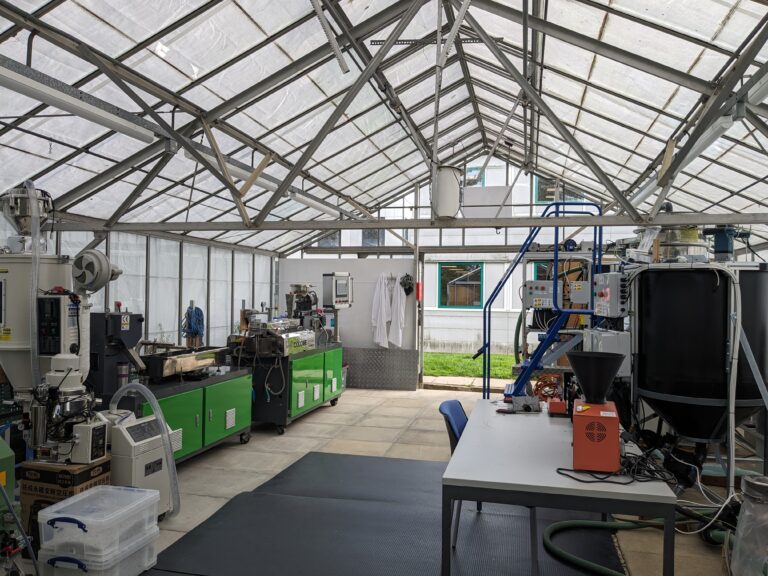
Next Phase of Growth
With this investment, LabCycle will:
- Move into a larger operational site to expand processing capacity
- Scale its patented AutoDecon technology
- Grow its team to meet rising demand across research and healthcare
Founder Quotes
Colin Francis, Co-founder & CEO of LabCycle:
“For too long, laboratory plastic waste has been treated as an unavoidable environmental cost. Our mission at LabCycle is to build a truly circular economy, and AutoDecon makes that possible, cutting carbon emissions by over 90% compared to the current market solution: incineration.
This investment now moves us into a phase of focused execution as we scale our operations to meet the growing demand across the sector.”
Helen Liang, Co-founder & CTO of LabCycle:
“The belief and support from our investors, collaborators and advisors has been instrumental in reaching this stage.
Their insight and challenge, alongside their confidence in our team, give us a strong foundation as we scale LabCycle and drive lasting change across research and healthcare.”
Share & Contact
Website: https://labcycle.org
LinkedIn: https://www.linkedin.com/company/labcycleltd
Press Contact:
Colin Francis
info@labcycle.org